Indian cinema has given us many popular songs based on classical ragas. The creative genius of music directors has afforded us several benchmark compositions wi...
Indian cinema has given us many popular songs based on classical
ragas. The creative genius of music directors has afforded us several benchmark compositions with tricky components of
raga,
laya, and
bhava. These can be broadly grouped into:
Creating a new raga
Rasika Raja Taguvaramu from the movie
Jayabheri (1959) sung by Ghantasala is based on a new
raga, Pratapa Rajashekhara (a combination of Kaanada and Chakravaaka in different
sthayis) created by Pendyala Nageswara Rao.
A seamless combination of two or three ragas
Meerajaalagalada Nayanati from the movie
Krishna Tulabharam (1966) sung by P Susheela composed by Thotakura Venkata Raju.
Using only the ascent or descent of a raga
Kalaivaaniye from the movie
Sindhubhairavi (1985) sung by Yesudas composed by Ilaiyaraja uses phrases only taken from the
arohana of the
raga Kalyani.
Using only a few swaras for the composition
Ragam Rasamaya Vedamai, a song comprising only three notes, composed by Ilaiyaraja.
Creating a template for a raga through a song
Sringara Sheela from movie
Bhakta Kanakadasa (1960) sung by S Janaki and P B Srinivas and composed by M Venkataraju serves as a standard for
Raga Pahaadi.
All these qualities throw a challenge to the capacity, range, and sustenance of vocal expression. That said, the musical thought of the composer is given voice only by a capable playback singer. Legends like Lata Mangeshkar, Mohammed Rafi, P Leela, P Susheela, S Janaki, Ghantasala, P B Srinivas have etched in the hearts of millions of musical fans a joy of Indian classical music through their songs.
The aim of a music director is to provide a compact, unadulterated (with respect to both background and foreground score) musical experience with distilled melodic components in a short span of five to ten minutes. It is a mammoth task to condense a
raga, let alone improvise upon the essence of a
raga in such a short time period. Only an extraordinary mind knows where to begin and when to end. This optimal concoction must pass through the test of orchestration, vocal tracks, and perhaps the scene and mood befitting the song. Taking into account all of these, the playback singer needs to push the song beyond its prototype state to reach the fastidious heart of a true connoisseur.
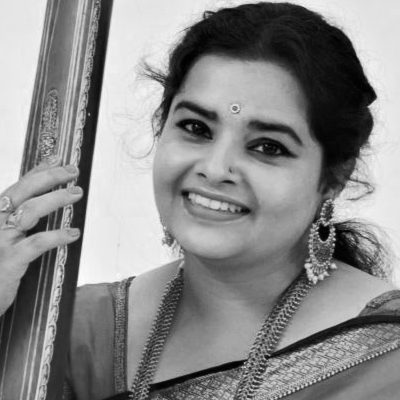
This essay is an examination of one such film song. It proved to be both the best and toughest song in S Janaki’s career. India’s most versatile playback singer, S Janaki is blessed with a voice that causes transcendental joy to the listener. She has the capacity to retain her sonorous voice and create an effect of grandeur even when she reaches the high octaves, just as she does while being in the comfort range. She can adapt her voice to suit a child, an aged person, and even a man. A common feature of many playback singers of the yesteryear is that their training was grounded in Indian classical music. As a result, they seamlessly adapt any style across musical genres.
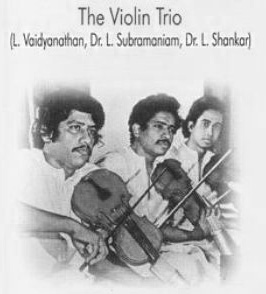
[[{"type":"media","view_mode":"media_large","fid":"9162","attributes":{"class":"media-image wp-image-13507","typeof":"foaf:Image","style":"","width":"426","height":"471","alt":""}}]] The Violin Trio
The purpose of this essay is to highlight the details, phrases, emotions, and complexity of the song ‘
Shiva Shiva Ennada Naalige Yeke’ from the Kannada film
Hemavathi (1977). This wonderful piece was composed by one of the veteran violin maestros of Carnatic music, L Vaidyanathan (1942–2007). ‘Vaithy,’ as he was affectionately addressed, carried forward a lineage of musicians and is also the elder brother and mentor of acclaimed violinists Dr. L Subramaniam and Dr. L Shankar (now Shenkar). The three of them performed worldwide as the famous ‘Violin Trio.’ The complex and rapid notes in the string section and the flow of the violin are evident in this song. To add to it, the situation in the movie for this song is that of a concert rendition of a classical musician (as opposed to a romantic duet or an invocation of the divine). This gave ample opportunity to make the song heavy with classical beauty and grandeur.
The song is based on two popular Carnatic
ragas: Abhogi and Todi
Abhogi is an
audava raga that is a
janya of Kharaharapriya, one of the foremost ragas predominantly used for
Sringara (romance). It is also the parent of several
janya ragas of unique emotions. Abhogi can serve to evoke the emotions of
Sringara,
Bhakti (devotion),
Virakti (lack of passion), and
Shakti (energy, power). This
raga has the
swaras Shadja (S), Chaturshruti Rishabha (R
2), Sadharana Gandhara (G
2), Shuddha Madhyama (M
1), and Chaturshruti Daivata (D
2)
. This
raga works well across the three octaves. It suits medium and fast tempi.
Todi is a powerful masculine
raga that is characterized by its robustness. Its defining features are the
Kampita Gamakas (vibrato-like embellishment) and emphasized expression. Todi is so dependent on
gamakas that without specific musical ornamentation, it no longer remains Todi and gives rise to a
raga resembling Sindhubhairavi. Todi is a
janaka raga (parent scale) with the
swaras Shadja (S), Shudda Rishabha (R
1), Sadharana Gandhara (G
2), Shuddha Madhyama (M
1)
, Panchama (P), Shuddha Daivata (D
1) and Kaishiki Nishada (N
2)
. The traversal of Todi is itself a great learning to all music students. The moves between neighbouring notes are engulfed with the influence of the previous. This
raga evokes the feelings of
Karuna (pathos) and
Bhakti. In this manner, Todi and Abhogi together form a contrasting picture of
Janaka and
Janya ragas,
Kampita and Non-
Kampita gamakas, and
Druti and
Deepti Rasadharmas.
In this song, the composer has not combined two
ragas to form a new
raga, as in the case of Mohana Kalyani where Mohana becomes the
arohana and Kalyani becomes
avarohana. The composer has used Abhogi as a whole followed by Todi as a whole and this is repeated as a sequence throughout the song. This gives the music director more liberty to use the
raga as a whole without worrying about its movement. Further, the alternating effect gives a contrasting picture of the two as against a forceful obtrusive combination.
The song has three sections:
alapana, the composition, and
swaraprastaara.
Alapana
While the song begins with the
alapana, there are short segments in the composition itself where the free-style melodic improvisation has been added. In the beginning, the
alapana is of an alternating nature. There is another place where the
alapana has been done in Abhogi alone – ‘
Premadi Koogalu Shankara.’ The word ‘
Shankara’ is prolonged and embellished with swift
Aroha and
Avaroha sancharas. The course of
sangatis gradually continues to reach higher notes, finally touching the
tara Shadja. One must appreciate the felicity of Janaki’s voice; she has achieved this effortlessly! We can clearly notice the mighty and bold canvas of Abhogi at this point:
‘R G M D Ṡ D M G R S’
‘R G M D Ṡ Ṙ Ġ Ṙ Ṡ D M G R S’
‘R G M D Ṡ Ṙ Ġ Ṁ Ġ Ṙ Ṡ D M G R S’
‘S R G M D Ṡ Ṙ Ġ Ṁ D Ṡ D Ṁ Ġ Ṙ Ṡ D M G R S’
https://www.youtube.com/embed/LWzssBVB2V8?start=126&end=158&version=3
Also while singing ‘
Shankara’ and creating successive
sangatis, the composer emphasizes the beautiful usage of Abhogi,
Sadharana Gandhara (G
2). Though both the
ragas have the same
Gandhara, one can keenly observe the striking difference between the G
2 of Abhogi and G
2 of Todi. The Abhogi
Gandhara oscillates from
Madhyama to
Gandhara whereas the Todi
Gandhara oscillates from
Rishabha to
Gandhara.
Composition
[[{"type":"media","view_mode":"media_large","fid":"9163","attributes":{"class":"media-image wp-image-13505","typeof":"foaf:Image","style":"","width":"377","height":"283","alt":""}}]] S. Janaki
The composition, like a typical
kriti, consists of a Pallavi, Anupallavi, and Charana. The song is deity-specific and invokes Shiva. The lyric in the pallavi and anupallavi sections are interrogative in nature. To invoke the question ‘
Yeke’ (‘Why’) through music, the composer has used phrases like ‘R G M,,,?’ and ‘D Ġ Ṙ,,,?’ in Abhogi; in Todi, he uses phrases like ‘Ṙ Ṡ N D,,,?,’ ‘D N D,,,?,’ and ‘Ṡ Ṙ Ġ R,,,?’ One must observe the
Kampana given to D
2 in Abhogi.
In both the
ragas, Tara Rishabha has been used to pose a question. The lyric in the charana consists of simple non-interrogative sentences that are declarations. For example, ‘
Ishwaranendare Shashwata Sukhavu,’ ‘
Shankaranendare Sontasha Dinavu.’ The
sambodhane (addressing someone or something) of Shiva as ‘Shankara’ (‘
Premadi Koogalu Shankara’) has given an aesthetic appeal both lyrically and musically. The word ‘
Shankara’ is
akaranta (ending in ‘a’) through every letter. It can be endlessly prolonged to create varied musical embellishments. As a result, the composer has taken the help of this word to create a grand picture of Abhogi.
Swaraprastara
The
swaraprastara is one of the most complex aspects of this song. And it is because of this segment that the song is difficult to replicate. It is here that the foremost
gamakas of the
ragas is enhanced via superfast and tricky
swaraprastaras. The
Eduppu (starting point or place) chosen for Abhogi
swaras is ‘
Ishawaranendare Shashwata Sukhavu’ and for Todi
swaras it is ‘
Shankaranendare Santosha Dinavu.’ It is noteworthy that the
swaras used to reach the
Eduppu is different every single time. This gives different combinatorial effects to the underlying
Eduppu Ettugade.
To illustrate the above:
Ishwaranendare has the following notation: ‘M
MM M,, M M.’ The first
swaraprastara flows like: ‘M,DMDDMGRGMG,RS,RD,SRG Ishwaranendare.’ The last part of the second
swaraprastara flows like: ‘…R,RGMDṠṘĠ, G,SRGMDṠṘĠṀ Ishwaranendare.’ The
swara onset of the word
Ishwara is linked and played with different
swara ending each time.
Similarly for Todi
, Shankaranendare Santosha Dinavu has the following notation: ‘M GM D,DD MDNSNDND,.’ The first
swaraprastara flows like: ‘…MDNṠD, GMDNṠD, ṠD,
Shankaranendare.’ The second
swaraprastara flows like: ‘…ṠNṘṠĠṘṀĠṘṠD, ṠNDMG, RṢRG
Shankaranendare.’
https://www.youtube.com/embed/LWzssBVB2V8?start=176&end=248&version=3
This is followed by the
Ati druta swaraprastara or the rapid, complex, and tough to maneuver portion of the song that provides a spectacular climax. This bears testimony to the abilities of the singer. The
swaras now move into ‘
Korappu’ format, with Abhogi and Todi taking turns, as usual. The singing must happen at the rate of 8 to 9
swaras for one beat. This generally reduces the diction and clarity of the notes. S Janaki has proved her worth by maintaining the clarity in pronunciation at that breathtaking speed. To add to the complexity already created by the speed, there are complications in
swaras scaling up to Ati Tara Shadja. Triplet combinations have been used to reach the Tara Shadja: SRG RGM GMD MDṠ DṠṘ ṠṘĠ ṘĠṀ ĠṀḊ ṀḊṦ. The pattern traverses back forth from Tara Shadja: ṦḊṀ ḊṀĠ ṀĠṘ ĠṘṠ ṘṠD SDM DMG MGR GRS
https://www.youtube.com/embed/LWzssBVB2V8?start=247&end=292&version=3
The tongue-twisting and most bewitching part is the
Muktaya. This is again in
ati druta kala and also combines both Abhogi and Todi as two halves of an
Avarta. It is a herculean effort to perform the three tasks of singing
gamakas (
kampita gamaka of Todi) in
Ati druta kala and switch seamlessly between the
ragas. One has to admit that it is harder to sing this as compared to playing it on an instrument. The
Kampana provided to the
swaras of
Gandhara,
Daivata, and
Nishada of Todi and the
datus (jumps) of the
swaras in Abhogi at that speed is a grueling roller-coaster exercise that will prove to be a challenge even to the most experienced singers. It is quite natural that the veteran considers it the most challenging song of her career.
https://www.youtube.com/embed/LWzssBVB2V8?start=291&end=312&version=3
Conclusion
This song truly occupies the frontline space of Indian film music for being complicated yet melodious; having musical gymnastics yet flowing smoothly; having clubbed two
ragas while preserving their identities; posing a challenge yet having charm. It requires a great voice with felicity to handle
gamakas as well as speed. It is composed in a unique manner with so many wonderful aspects of music that any student of the art, upon listening to it, will feel energized, inspired, and filled with joy.
Thanks to Shatavadhani Dr. R Ganesh for his review. Edited by Hari Ravikumar.
Comments